The Chinese troops have pulled back from Daulat Beg Oldi sector in Ladakh where they had intruded on April 15, it was confirmed today even as India was considering a proposal from China to have more friendly contacts between the Armies of the two countries.

Satellite images dated August 17, 2021, have revealed upgraded infrastructure near the Depsang plains along with the Western sector of the LAC between India and China.

The strategically important Mudh-Nyoma airbase in Ladakh has been operationalised, enhancing India's military capabilities near the Line of Actual Control (LAC) with China.

In a sudden development, India and China pulled back their troops from the stand off point at Daulat Beg Oldi sector in Ladakh, where the Chinese forces had intruded nearly three weeks back, official sources said on Sunday night.
Former vice chief of Indian Air Force Air Marshal P K Barbora (retd), known to be an outstanding air warrior who was instrumental in reactivation of the Daulat Beg Oldie (DBO) air strip in eastern Ladakh, passed away at a military hospital in New Delhi on Monday. He was 72.

The sortie had to be executed in good weather and in sub-zero temperatures, which meant it was to be accomplished by mid or third week in May before the earth heated up and the monsoon clouds made things difficult.
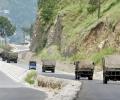
Sources said the work has already started on this project and the new road will connect Manali with Leh near Nimu where Prime Minister Narendra Modi had recently visited during the ongoing conflict with China.

The talks between the two sides near Galwan Valley ended in a stalemate on Tuesday as well as Wednesday, the sources said.

The amazing story of how a little known cheese from Ladakh stunned the world!

"The contents of video being circulated are not authenticated. Attempt to link it with the situation on the Northern borders is mala fide," the army said in a statement. It said differences between the two sides are being addressed through interaction between military commanders following established protocols on management of border between the two countries.

A new Border Personnel Meeting point was on Saturday operationalised at Daulat Beg Oldie along the Line of Actual Control in Ladakh sector, which would serve as the northern-most meeting point between armies of India and China.

Against the backdrop of recent Chinese incursion in Ladakh External Affairs Minister Salman Khurshid Saturday said the two countries are working on a new Border Defence Cooperation Agreement.

Chinese troops are maintaining an aggressive posture and showing no signs of retreating from the Daulat Beg Oldie sector where they have pitched their five tents and are getting regular supplies through trucks. According to reports sent to the Union home ministry, the Chinese side was patrolling the DBO sector, 19 km deep into Indian territory, refusing to end the face-off which has entered the third week.

A day after rejecting any incursion by its troops in India's Ladakh region, China said both countries should work together to resolve the boundary dispute to "create good conditions for the sound development of bilateral relations".

India raised the issue with China last week immediately after the incident of Chinese incursion came to light.

If China's White Paper figures are authentic, the Indian Army, with 1.2 million soldiers, is 50 per cent larger than the PLAA.Ajai Shukla reports

Could some frustrated Chinese generals have decided to teach India a lesson to sink Xi Jinping's world dream, asks Claude Arpi.

After the pullout by Chinese troops from Daulat beg Oldi area of Ladakh, infrastructure development programme along the Line of Actual Control is expected to be stepped up besides beefing up of the presence of Indian army there.

Showing no signs of withdrawing from the Indian territory after their incursion in Ladakh two weeks ago, Chinese troops have erected an additional tent in the Daulat Beg Oldi sector raising to five the number of such structures in the area.
The military gap between India and China is growing steadily. Clearly, China's negotiating strategy is to resolve the dispute when the Chinese are in a much stronger position in terms of comprehensive national strength so that they can dictate terms, says Brigadier Gurmeet Kanwal (retd).
The military gap between India and China is growing steadily. Clearly, China's negotiating strategy is to resolve the dispute when the Chinese are in a much stronger position in terms of comprehensive national strength so that they can dictate terms, says Brigadier Gurmeet Kanwal (retd).
We have seen greater Chinese activism in the South and East China seas, but not across the Sino-Indian border. If the Chinese troops stay put in the Burthe area and construct defensive structures, that will be an indicator of their deciding to follow a similar policy of activism across the Sino-Indian border, says B Raman.
India and China are in touch to resolve the situation arising out of the 'deep incursion' by Chinese troops, who entered the Indian territory in Daulat Beg Oldi sector in eastern Ladakh and erected a tented post. According to government sources, the issue was raised by India after the incident came to light some time ago.
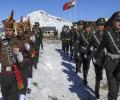
The major general-level meeting discussed ways to implement the disengagement of troops from Galwan Valley as agreed during high-level military talks between the two sides on June 6. The Indian delegation at the talks was led by Leh-based 3 Infantry Division commander Major General Abhijit Bapat. The two sides held Major General-level talks on Tuesday as well.
The Chinese intrusion into Indian territory in Ladakh seemed to be a trial balloon for dealing with troublesome Indian positions
'The supreme art of war is to subdue the enemy without fighting' said the famed ancient Chinese military strategist Sun Tzu. That seems to be the ploy behind the Chinese intrusion in Ladakh, says Colonel (retd) R Hariharan

India is likely to send an army contingent to Daulat Beg Oldi area in Ladakh amid the failure of the flag meeting to end the impasse on the incursion issue with the Chinese side refusing to leave, claiming it to be a part of their territory.

'No aeroplane in the world has been designed to switch off its engines above 14,500 feet.' 'Thanks to a lot of practice, we were able to execute a flawless landing at DBO at 0900 hours on 31st May, creating history.'

The use of the strategic road by the Indian security forces from Leh has helped in reducing the travel time between Leh and DBO to six hours.

The delegations were led by Brigadier JKS Virk from the Indian side and Senior Colonel Chen Zheng Shan from the Chinese side
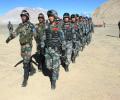
Indian and Chinese troops remained engaged in an eyeball-to-eyeball situation in several disputed areas.
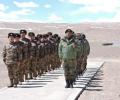
At present, the Chinese Army has diverted its troops carrying out a massive exercise on their side of the LAC and deployed them at short notice across the Line of Actual Control in the areas under the Indian Army's 81 and 114 Brigades deployed to counter the Chinese assertions from Daulat Beg Oldie and adjoining areas.

The exchange took place at five Border Personnel Meeting points along the LAC, the sources added.

Army chief General Naravane said the ongoing dialogue will sort out all the perceived differences between the two countries.
The talks between the two armies are going to be held this week at multiple locations including Patroling point 14 (Galwan area), Patrolling point 15, and Hot Springs area, top government sources said.
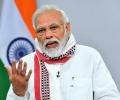
The military brass is learnt to have apprised Modi about the evolving situation in eastern Ladakh, though officials maintained that the agenda of the pre-scheduled meeting was to discuss the ambitious military reforms and ways to boost India's combat prowess.
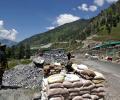
It will be the third road link to Ladakh after the other two roads: the Manali-Leh road and Srinagar-Leh highway. The work on reopening an alternative road to Ladakh from Himachal Pradesh has been expedited as it is a strategically key road, said an official on condition of anonymity, adding the project is expected to be completed by the end of 2022.

Out of 18, four personnel were critically injured but they are responding to treatment and are stable now, people familiar with the matter said.

Defence Minister Rajnath Singh held two-back-to-back meetings with top military brass on Tuesday deliberating on the situation in eastern Ladakh after an Indian Army officer and two soldiers were killed in a violent clash with Chinese troops in Galwan Valley.

In a subtle show of strength to China, the Indian Air Force on Tuesday landed its C-130J Super Hercules transport plane at the world's highest and recently-activated Daulat Beg Oldie airstrip in Ladakh near the Line of Actual Control, the scene of a stand-off with Chinese troops in April.
